MUSHY'S MOOCHINGS: Five Points
Showing posts with label Five Points. Show all posts

Wednesday, August 25, 2010

VISITING THE WILLIAMS GENE POOL

Like most families, my mother’s family has only seen group gatherings over the past years at funerals. It’s always a treat, even under those circumstances, to see the whole family together. So why did we wait so long to have a reunion?

Except for my mom and Aunt Nell, the anchors of the family have all gone. Their children, the “first cousins” have always played well with each other and savored the little time they’ve spent with each other. We’ve all grown up and had families and missed out on each other’s lives and children. It’s now up to us to keep the family unity going and try and pass on family heritage and stories we lived and have heard. Hopefully, our kids will build enough of a relationship that they will want to continue meeting and telling the stories.

For years it was important for my mom and dad to “go home” and visit everyone they could in the two day trip. That was impossible since mom had 7 siblings, and dad had 8. All those aunts and uncles and cousins were best visited at the grandparents’ home. Those gatherings were filled with the laughter of numerous children chasing through the house and yard, and with the best “country” grub ever served!

For the Williams extended family, Grandmother Williams’ house was always the focal point.

Those weekend gatherings are etched in my memory, although most have merged into one or two events. There are a few black and white photos of us kids, here and there, that were immortalized by Brownie Hawkeye cameras.

When grandmother was gone the focal point, for my family at least, sort of went to my Aunt Melinea’s house, where my cousins Ann and Brenda often gathered, making it seem like “home” to me. Other family members would drop by some visits, but for the most part the rest of the aunts and uncles and cousins were seen less frequently. I lost touch with them, having gone off to war, getting married, and college, and even though they were marrying and having babies, they remained little 10-year old kids in my mind.

Later, and I’m not sure why, the focal point shifted to Uncle Tom’s. He loved to have fun and his lakeside home made a perfect place for family to gather. The most fun for me were the November University of Tennessee vs. Alabama football gatherings, complete with his hot chili and warm welcoming manner. Tom would slap his elephant with each touchdown (Roll Tide) and I would slap Smokey (Rocky Top)! Back and forth the dueling mascots would sing out until someone lost, and, in those days, it was usually him! Unfortunately, that has changed and...and I miss him so much.

Now, with Uncle Tom gone, there is no longer a focal point for Williams gathering. The gatherings from now on will probably be church social rooms, community centers, or, in the case of the most recent gathering, a senior center. The only problem with that is that these events will, at most, be annual events. An era has passed that could only be brought back by someone, like Uncle Tom, stepping up and making it a point to allow family to mess up their house more than once a year. Alas, it seems, me included, that we’re all just too busy these days.

One shining light for us though, seems to be email and Facebook. These modern, impersonal tools, are beginning to help us stay in touch. I suppose if there is anything redeeming in the modern technological age, these tools are it.

I’ve posted some family shots on Facebook, and sent numerous others via email, so the event was well documented. Other photos will dwindle in as pocket camera and cellphone shots are distributed.

My son Corey accompanied me on the 300+ mile trip to the 2010 Williams Reunion. As a small boy, he made a few friends with “second cousins”, but from about the age of 10 on he has had no contact. So, it was rewarding to him to go back to our “home” and see family. Maybe one day his girls will also come and make some new family ties.

I took Corey on the “Tri-cities” tour of Florence, Sheffield, and Tuscumbia, Alabama, which has to include TVA’s Wilson and Wheeler Dams, and the all important feast at Walton’s! Walton's Restaurant, in the big city of Elgin’s Crossroads (Hwy 101), has the best fried catfish and hush puppies I’ve ever tasted. Corey wasn’t quite sure that was true until he actually sat down and tasted it. After that, I think he was finished before I downed my first piece!

They also have, what is described as the best BBQ in the Shoals area, but I have yet to try it. The fish being so good, and I only get down there once or twice a year, always wins out!

On Friday afternoon, after checking into the Hampton in Florence, we drove the loop from Florence to Wilson and Wheeler Dams and on to Walton's. From atop the Renaissance Tower, at the Shoals Hotel, we looked out over the “Tri-cities” area and down at Wilson Dam. We had to pay for the photos from the Tower by buying an $8 drink, but the view from the revolving restaurant was spectacular! The skies were so blue last weekend and the company couldn’t be beat!


Corey reminisced about our camping and motel trips back in the days we deer hunted. Those memories must be as special to him as they are me.

We left Florence on Sunday morning and traveled the “old road” up through Lexington, where I was born. I showed him Great Grandfather Johnston’s old home place, and reminded him that I was born upstairs in Grandpa’s bed. The old place looked pretty good with the addition of modern siding. However, it will always be the old shot-gun southern home sitting on rock supports, surrounded by Alabama red dirt, with its lightning rods gleaming in the sun. My mind didn’t even register the satellite dish hanging off the side...I only noticed it after examining my photos when I got home!

We made the short trek down Williams Road, crossed into Tennessee, and stopped at the Second Creek Church where there are both Williams and Mashburn kinfolk buried. Corey was so moved that he had to find a big tree behind the meeting shed! He felt much better after that relieving moment! ‘Nuff said!

On up the road we stopped at the old Mashburn farm, where I spent boyhood summers working the farm with Pa Mashburn. I rang the doorbell, but Aunt Louise, who still lives there, was gone to church. So, we walked around the home place and took some photos of the old barn, where I spent rainy days as a boy, and the house. It was so strange how small the front porch seemed to me. In my memory, that porch was a large as an airport runway! Strange how everything was so much bigger back then...’course I was so much smaller then!

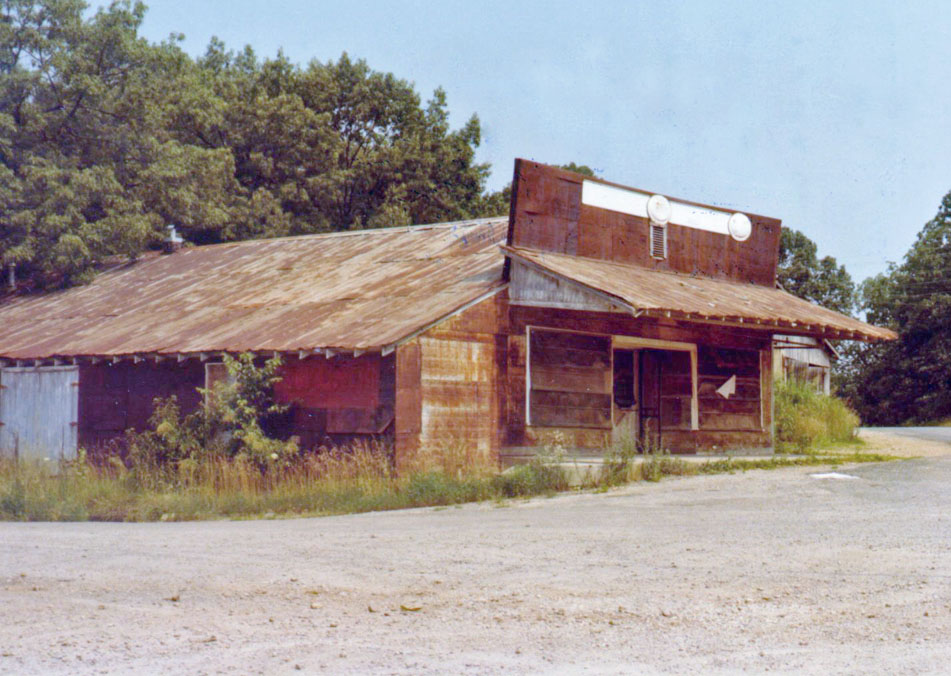
In the big city of Five Points, just two miles up the road, I photographed the old Mashburn store my uncle owned. It sits across the five-point intersection from the new Mashburn General Store where Aunt Louise still works. However, she was at church, like I said, and we missed her.

I told Corey stories of my summers working in the store and about the old men that sat around on drink crates whittling and swapping knives. Across the street, in front of the new store, were old men sitting around doing the same thing. Nothing seems to have changed in Five Points, Tennessee.

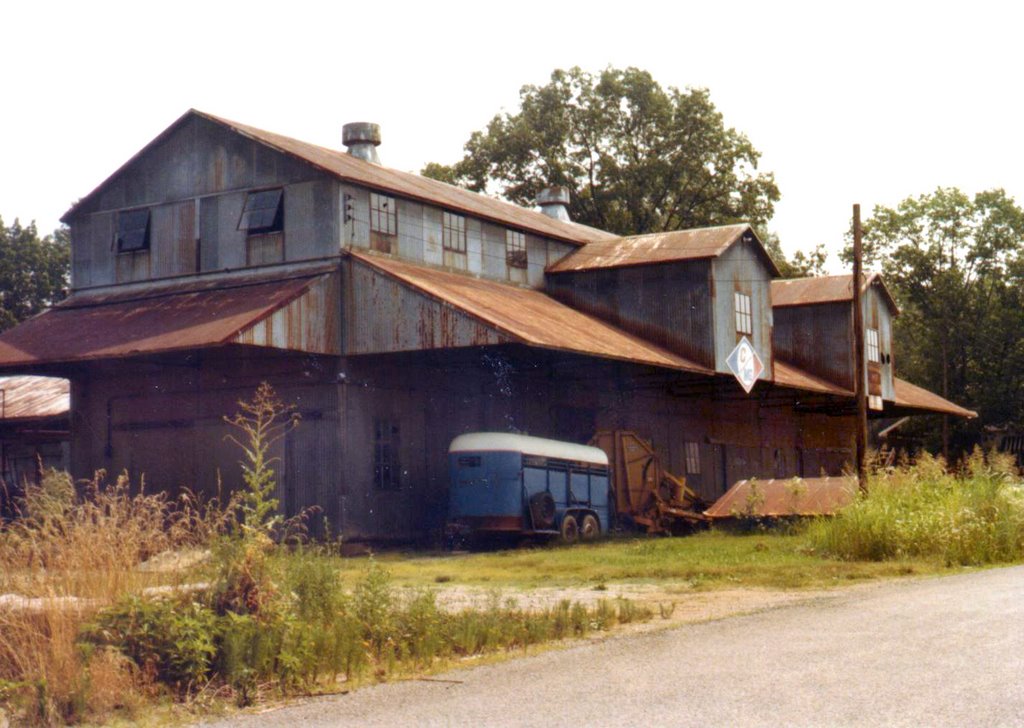
The old cotton gin is all gone and only two of the old warehouses remain. It’s sad that Corey missed those days. He would have loved to have ridden a wagon with Pa Mashburn up the dirt road to the gin to sell his cotton, or to play on the bales stacked in warehouses. He would have loved crawling through the tunnels in the bales of straw in the barn, or listening to the Grand Ole Opry on a battery powered radio, while sitting next to a flickering “coal oil” lamp.

He would have loved sinking into a “feather mattress”, up over his ears, under 3 quilts listening to the rain hitting the tin roof at Grandmother Williams’ house. He wouldn’t have enjoyed the trip to the outhouse in the dark, ‘cause I know I didn’t!

On the way home we passed through Lawrenceburg, Tennessee. It was Lawrenceburg where the old Mashburn family did their “trading”, and in the old days it was an all day, if not 2 day, wagon trip. I remember Ma Mashburn excitedly exclaiming once when we brought her back home in dad’s car, “Lordy be, we got back the same day we left!

Corey enjoyed that story, and the look around town. I showed him the statue of Davey Crockett in the town square. I remember a News Sentinel reporter once stated that there was no statue to David Crockett, so dad sent him a photo of this one in Lawrenceburg. The reporter corrected his story!

Yes, they are all gone...turned to vague memories. However, these memories, as trivial as they may be to others, need to be told and retold. They are a record of what we were and are, what we thought and think. They make up a history of the family...our roots. We must not let them slip away like we have allowed the memories of those that came before us to do.

What I wouldn’t give for a file full of jpeg photos of Williams, Johnston, Morrison, Hammonds, and Mashburn folk running around at family gatherings back through the 18, 19, and 20th centuries. They didn’t have what we have, so it can’t be - the memories lost brings a tear to my eye.

Families don’t just exist in their genes, they exist in memories. The stories must be told or we, or they, have not lived at all.

May God bless and keep the Williams family until we meet again.

To see photos of my "down home" visit, CLICK HERE!

Tuesday, March 09, 2010

DID YOU EVER EAT A MOUTHFUL OF DIRT?

I alluded to the fact that I ate dirt between the ages of 3 and 4, in a post titled "Learning To Face Life's Little Problems", but I'm not sure I ever detailed the compulsion I had for it. Quite frankly, I liked the taste of dirt!

It is sometimes said that you have to “eat a peck of dirt before you die”, and, because of my childhood vitamin and mineral deficiencies I’m probably well on my way out!

I think it all began with one innocent pinch of cigarette ashes…BAM…I was hooked on that ashy taste. However, it grew out of a lust for some mineral or vitamin, probably iron, that I was not getting in my normal diet. So, I experimented around the yard and everywhere I visited for a year or two around the turn of the 50’s decade.

Once while visiting us in Oak Ridge, Tennessee, my uncle once saw me pick up a chunk of common yard dirt and put it in my mouth. He quickly brushed it from of my hand, picked me up, and stood me in the midst of the freshly hoed dark soil of my dad’s garden, saying, “Here, get you some clean dirt son!

He, like a lot of parents and people who study bacteria today, was not overly concerned about me eating dirt. A case in point is this video clip of Dr. Bonnie Bassler, a professor at Princeton University, who is a molecular biologist.

My Uncle Earl stood proudly by and watched me taste the rich black dirt. My mom, of course, was not quite as open minded and would always make me put it down and immediately wash my hands and try to wash my mouth out.

The basic truth is bacteria teach the body the specifics of creating the right kind of antibodies that protect our bodies throughout our lives. Think about it, with bacteria, not just crawling all over everything, but covering everything, we stay amazingly well.

Oh sure, we get the occasional cold, but without an immune system that has been educated by bacteria we probably wouldn’t have survived the first year of life. Just look at me…I survived all this time after eating cigarette ashes and dirt!

I can still remember the lime taste of the earth around Five Points, Tennessee where my grandfather raised cotton and corn. The soil was almost white, with tiny little bits of rust colored rocks in it. The soil is lime rich and I bet those rust bits were from iron, which is exactly what I needed. It made the best clumps from which I would scrap off a mouth full with my upper front teeth.

My mom took my little skinny body to the doctor and asked him how she could get me to eat more “real” food and stop eating dirt. His solution, which worked, was to give me a big brown bottle of some vitamin elixir containing a lot of iron.

I was soon eating more and growing toward the mass I am today, and never picked up another clod of dirt to eat again. Although, like I said, I remember its taste, with all its variety of tastes today.

I think about this every time I see my granddaughter Lily crawl under the table at a restaurant. We try to keep her hands clean and out of her mouth, but it’s inevitable that she will get some dirt into her mouth. I remind myself that her body is learning to produce the antibodies that will keep her alive and well for a long time.

I wish someone had told Howard Hughes this, and I hope Howie Mandel reads my blog! Dirt is actually good for us guys! However, you must remember that garden dirt is cleaner than yard dirt!

Friday, December 07, 2007

ALL GOOD THINGS MUST END

A little piece of my past has been torn down. This old 40,000 gallon water tank, erected sometime around the mid-thirties, was the most recognizable landmark in Five Points, Tennessee. The pictures show a very old structure that had the town name, and few girlfriends names painted across it many times.

Besides the tank, there was a cotton gin, and my uncle’s general store, where I worked many a summer as a kid.

Rust has just about taken over this little farming community center, but the memories in my mind are as fresh as the day they were born.

These great shots were sent to me by my cousin Mark, whose mother still operates the new general store there. Mark works in the Tennessee Department of Environment and Conservation’s Division of Underground Storage Tanks, as an environmental specialist. He assured me he had nothing to do with the destruction of this old landmark!

Mark said except for the rust that fell out of it and a few bullet holes, the structure appeared very sound.

Apparently the property, including the tank and cotton gin, were recently auctioned. He fears the gin will also meet the same demise soon.

Five Points is where my grandparents settled, and began farming, after coming by covered wagon from Boaz, Alabama, sometime in the early twenties, or just a short time after my dad was born in 1919. Five Points is at the intersection of Five Points-Liberty, Mockerson, Evans, and Legg Roads, some twenty miles south of Lawrenceburg, Tennessee. Lawrenceburg is the hometown of Fred Thompson, and where I started the first grade!

Maybe soon, we will have a family reunion and we can again refresh our rusted memories!

Monday, September 18, 2006

MOUNTAIN FOLK!

My mom and dad tried hard to keep in touch with their family when dad took up the electrical craft and left the farm. Almost every other weekend was time to “go down home.” It was fine with me for the first ten years or so, but as soon as I became self aware and made friends I resented having to go. I longed to be older so I could stay home and be with my friends or just be by myself. However, I do not remember that happening more than once.

One of my earliest memories of “going down home” was of the old Mashburn home place shrouded in darkness and somehow out of place than the last time I saw it in the sunshine.

My uncle Ersie actually replaced the spot where the old homestead stood with a brand new 1950’s ranch style house and lived there with his parents and sister until he married sometime in the mid-sixties. Pa, Ma, and Lois then moved to another little farm only about a half a mile from Five Points, TN.

This particular night, when I was around 4 or 5, was not the first time I saw the old home place, but was the first time I can remember it. All I knew was that it had been moved from somewhere that I remembered it being before, but I had no previous recollection of where it sat. It was my first real consciousness of the house and I was seeing it in strange circumstances and in the eerie light of “coal oil” (kerosene) lamps.

The new house builders had pulled the old house about 200 or so feet, from its original resting place, out in front of the barn. It was there the family camped until the new house was finished.

As dad got out of the car at the end of our drive “home,” he yelled his familiar “MOUNTAIN FOLK!” greeting toward the house. As the other car door slammed shut, we could see faint yellow light coming from inside the house. Farm folk go to bed early, soon after dark usually (or as they say, “With the chickens”), so it was most likely about 8 or 9 o’clock and our arrival probably aroused them from their first blinks of “REM” dreaming.

As my dad opened the door, the yellow “coal oil” lamp light glowed on the face of my Aunt Lois, lying on her side on a quilt pallet on the floor and putting on her glasses. “We gave up on ya’ll, and turned in about an hour ago.” Lois said, getting up to hunt for more quilts.

That is the only memory I have of the old house, and after that weekend only the “new house” remains in my thoughts of what “home” was. I am quite sure my dad lost a host of memories after that of his days in and around the “old” house. A little bit of him gone and the first embers of my memory beginning to glow. For me, it was just a doorway opening to yellow light and the love and greetings of my grandparents and aunt in a time and place gone forever.

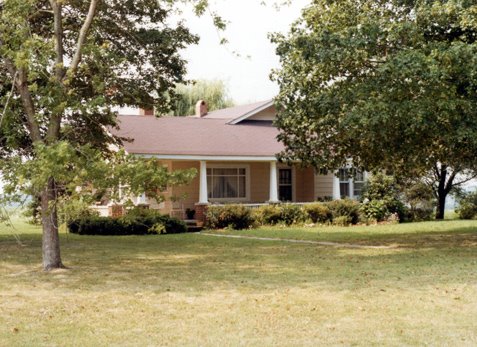
The new house was “down home” to me from the next visit onward. It was a fine house with indoor plumbing, brick sides, lights in the pillars of the porch, and beautiful hardwood floors throughout. I do not remember there being any heat source other than a large fireplace in the living room. All the beds were piled high with colorful handmade quilts on top of plump feather beds, and there was certainly no air conditioning in those days.

The new house still stands today and still looks good for its age. I am sure central heating and air has been added since those days, but I have not been in the house in more than forty years.

When I pass I still imagine family standing around in the kitchen watching Ma and Lois cook, or sitting around the dinning room table, the fireplace, or in the living room laughing and talking conversations they had years earlier. I wonder if the smells of cooking from those days still lingers somewhere in the corners of the dinning room and kitchen, or at least in the attic somewhere protected from time.

I wonder if the old sound of me playing choo-choo train on the old foot peddle powered sewing machine and making it clang into station can be heard late at night, or the sound of my running feet as I rode my “stick horse” around and around the hall, through the living room, into the dinning room, and on into the kitchen and began another dusty trip down the hallway trail again and again.

The “stick horse” was a stick Pa made for Ma so she could smooth out the tops of the feather beds while standing on one side of the beds. One end served as the handle end, being slightly larger than the circumference of the rest of the “smoothing stick,” which was about one inch in diameter and about four feet long. Years of smoothing had honed the stick into a beautiful slick piece of country art. To me, a mighty fine palomino pony that was faster than the wind - what I would not give to ride that ol’ hoss today, and come down that hall announcing that the “Mountain Folk” are here again!

Tuesday, August 22, 2006

THE GENERAL STORE

You could roll all my nine first days at school into one terrifying event and you would still not come close to the intimidation I felt the first day my Uncle Ersie put me at the front counter of his general store. Up until that day, I had only put up stock, swept the floor, and filled the cold-water drink cooler with Double Cola, Cokes, Pepsi, Nehi Orange, and Grape sodas, and Sun Drops. Some of you will remember the days when soft drinks were a nickel apiece and you opened the lid of a drink cooler, and slid your drink selection along a metal rail, bottle still in the cold water, to where you placed the drink in the bottle slot and then pulled it up through a the bottle brake that opened if you had put your nickel in. They day drinks went to six cents caused a lot more work in the store. The drink cooler was not set up for an extra penny, so the bottle brake was locked open and everyone had to pay their six cents at the counter.

There was so much to remember and so many questions to answer: Where is the soda powder? Where is the baking powder? How much is the cheese a pound? How much is the bologna a pound? You got any 10-penny nails? You got any larger bags of corn meal? How much is my bill?

Everyone had a bill book located in a big metal box on the rear counter with their respective names printed on the end tab and filed alphabetically. Farmers usually only made money at the end of the summer when their crops came in, and my uncle carried them through the lean months on a hand written bill. Some were just a few dollars while others were several hundred dollars. My uncle did not seem worried about the bottom line because in those days people paid their bills, maybe not as quickly as he would have liked, but he knew all of them, who their children were, who they had married, and what relation they all were to him and the others, and he knew they would eventually pay.

People were just trustworthy in those days, pumped their own gas out front, came in, and told us how much they owed, and we never questioned their word. You cannot do that today!

On Fridays and Saturdays my two uncles (the other on was Uncle Arvie, cousin Lawrence's dad), my Aunt Lois, and I covered the counter and running to and fro up and down the aisles filling the customer's orders, and finally sacking it all up in a "poke" and recording the total on their tab.

After about two days I became comfortable with the routine and my knowledge of the store. I began to relax and watch the people as the came and went.

I began to know each customer by name. When they said, "Put on my bill," I often did not have to ask their name. I began to know the brand of snuff or tobacco each person liked and the kind of knife each carried. There was always some knife swapping going on. There was always someone, more often than not a group, sitting out front on a wooden drink bottle cases whittling, spitting tobacco, and talking about the weather.

I remember the parking area in front of the store was littered with drink bottle tops, all mashed down against the asphalt, some up, and some down. There must have been thousands of them laying there where someone had tossed it and leaned back on their bottle case and took a long slow tug on the cold liquid to settle the day's dust.

As the days and years went by, I began to like working the store. It was comforting to see the same people every day and to work along side my extended family. I was proud of my uncle who owned the only store in that area. Everyone called him "Drummer" from the years when converted trucks used to come by farms full of life's little necessities plus ice cream, candy, and cold drinks. When the truck was spotted, someone would call out "Yonder comes the Drummer!", and everyone ran for the road to reward themselves for the hard work they had done. My favorite was a Zero bar and a Sun Drop cola! If there were no Zero bars, I got a Coke and filled the glass neck up with salty peanuts.

Years later, I would be introduced to a Middle Tennessee treat called the "Turkey Drop!" It consisted of Wild Turkey and Sun Drop - mighty good!

One event will always stick in my mind. One of store's patrons was known as the areas big cattle farmer and he often truckeHerefordig white-faced Herford around to various farms for breeding purposes. While his owner was inside the store, I can remember looking at the massive bull while sweeping up the front porch. I looked at the bull's swinging equipment and thought about how he had it made.

I told someone that if we got to come back when we died as an animal, that I wantedHereforda big white-faced Herford with a package like that. He was trucked around from farm to farm, feed often, and had exclusive rights to all the pretty cows! What a life! Years later when McDonald's came along, I was not quite so sure being a big bull was a smart aspiration!

Just now I closed my eyes trying to remember it all; I get pictures, and smells I thought were gone. I remember how I loved slicing cheese off the big cheese wheel and weighing it on the big white scales with the rolling measure dial. I can smell the sweeping compound pushed along on the wooden floor in front of the big push broom. I can hear the air compressor running in the storage area that ran along one side of the store. I can feel the light grease on the nails has I weighed and poured them into little sacks. I can hear the footsteps of all those heavy work boots on the plank floor. I can hear the snap of a good knife springing shut.

Last time I was through the area, the old store still stood (see photo), and just across the street was a new and larger, more modern store, that my Aunt Louise had built sometime after Uncle Ersie died.

I suppose she too remembers the old store and hears and smells all the memories too. Like me she does not want it to be forgotten, because they were good times, good people, and great memories of a time America trusted each other.
UPDATE: My cousin Doris Ann just let me know that Aunt Louise still uses the book to record everybody’s “tab” and the same adding machine that was used in the old store!

Friday, July 21, 2006

THEM OLD COTTON MEMORIES BACK HOME

My first memory of cotton is dragging a child size cotton sack, maybe six feet long; through a hot field in early fall near Five Points, Tennessee along side my grandparents and my Aunt Lois. Lois and I always had a good relationship. She was already a confirmed and recognized old maid by the time I was old enough to drag a cotton sack. Later in my teenage years we would sneak a smoke together and discuss life as we understood it. However, I never asked why she never married.

My mom once told me it was because Lois’ six brothers scared off any suitors that dared to come around more than twice, and their reasoning was to ensure there was someone left at home to take care of Pa and Ma. From what I remember of them, they did not need any baby-sitting, but the deed was done and Lois probably spent many a lonely day and night, smoking her filtered cigarettes and watching “shoot’em ups” on her old black and white TV with its built-in ambient light that framed the picture tube.

But back in the day of the 80 acres of cotton on the old home place, the day began early and ended late. There were monotonous hours of chopping the cotton rows, sorting out the weeds from the seedlings and carving out a space the width of the hoe blade between single or double sprouts, but there were also conversations filled with laughter as we moved slowly down the seemingly endless rows. My goal was to move out along a row moving away from the shady fence row and back down a row that lead back to the water jug that gave a few moments of relief from the early summer sun of Middle Tennessee.

The best parts of the day was breakfast and supper, hot cat-head biscuits, warm cornbread, white syrup or molasses and butter on either one, both white and red-eye gravy, thick sliced farm raised bacon with thick crackling skin and an occasional pig hair, and a host of other things that don’t stick to a kid’s memory the way those did. Ma and Lois were probably the best biscuit and cornbread makers that ever lived – made with pure lard and fresh ground flour and meal. The biscuits made for supper could nearly be classified as a roll, but they were a true soft biscuit that was a little springy to tear apart. The cornbread was soft and fluffy on the inside with a hard chewy crust on the outside. It was probably my favorite of the two breads, and I often checked the deep well cooker on the back of the stove for cold pieces anytime I passed.

I spent many summers with Lois, Pa, and Ma, and they always kept me busy. I didn’t play much when I stayed with them, I mostly worked. Depending on the time of year I came determined the kind of work I did. There was grubbing new fields, chopping cotton, picking cotton, and best of all taking cotton to the gin. I remember riding high atop a mountain of fluffy white cotton in the back of a wagon drawn by two mules. Pa would tell me who lived where along the way and little anecdotes about each family or about a particularly strange family member as we rolled along the dirt road to the cotton gin.

At the gin, Pa pulled the wagon into line behind other waiting wagons and motor trucks. I watched as each load owner worked the big metal vacuum tube that extended from the side of the gin and sucked the cotton up and into the gin for baling. When our turn came I couldn’t stand not trying it and begged until Pa let me give it a whirl. As I pulled the tube to my chest I knocked off my cap and before anyone could react, up the shoot and out of my life it went. But, there was no time to morn the loss, and I continued to move the tube back and forth and watched the cotton eat its way to the bottom of the wagon, where it whirled the cotton around and around my feet until it lifted and allowed itself to be drawn up the tube and into the gin.

One day, a cousin and I sneaked off and played around the large warehouses near the gin where the bales were stored. Of course the doors were locked, but in those days things were not buttoned up as they are today. Two skinny boys could easily slip through the chained sliding doors or in an open window, and we did.

Cotton is very hard once compacted into 500-pound bales, but soft enough that knees and elbows do not get skinned when jumping and sliding around; that is unless you happened to skid to a halt on one of the burlap ends or hit one of the metal binding straps. There were narrow tunnels between some of the bale stacks and we explored them and imagined all sorts of games. The warehouse was huge and the bales were stacked very high and offered hours of uninterrupted play time.

When I worked and was under considerable stress, I would often dream about being in that warehouse on a rainy day, only I am no longer playing – I am either running away from someone or chasing someone and guns are involved. The cotton warehouse was spooky, dimly light, and mysterious enough to capture the imagination of a young boy and disturb the dreams of an old one.